

Quick answer: Real estate visual content works best as a planned system: CGI and walkthrough films to sell the vision before construction, drone footage for location and progress, and professional sample flat photography for tangible proof. Each should be accurate, clearly labelled where it is an artist impression, optimised for every channel and refreshed as the project progresses.
Why is visual content so important in real estate?
Visual content is important because buyers of under-construction homes are purchasing something they cannot yet see in full. Renders, films and sample flats are how they imagine their future home, judge quality and compare projects.
Strong visuals also power every channel: website, brochures, hoardings, social media, ads, portals and PR. Investing in a well-planned visual system usually pays back across the entire marketing programme.
What types of visual content do developers need?
Developers typically need CGI stills, walkthrough films, amenity visualisations, drone footage, location films, sample flat photography and video, and construction progress content. Each serves a different stage of the buyer journey.
The table below compares these content types.
| Content type | Stage | Main purpose | Refresh |
|---|---|---|---|
| CGI stills | Pre-launch and launch | Sell the vision | When design changes |
| Walkthrough film | Launch | Immersive experience | Rarely |
| Drone footage | Throughout | Location and progress | Each milestone |
| Sample flat photography | Post sample flat opening | Tangible proof of quality | When styling changes |
| Construction progress | Ongoing | Trust in delivery | Monthly |
| Completed project photography | Handover | Proof for future projects | Once |
How should CGI renders be briefed?
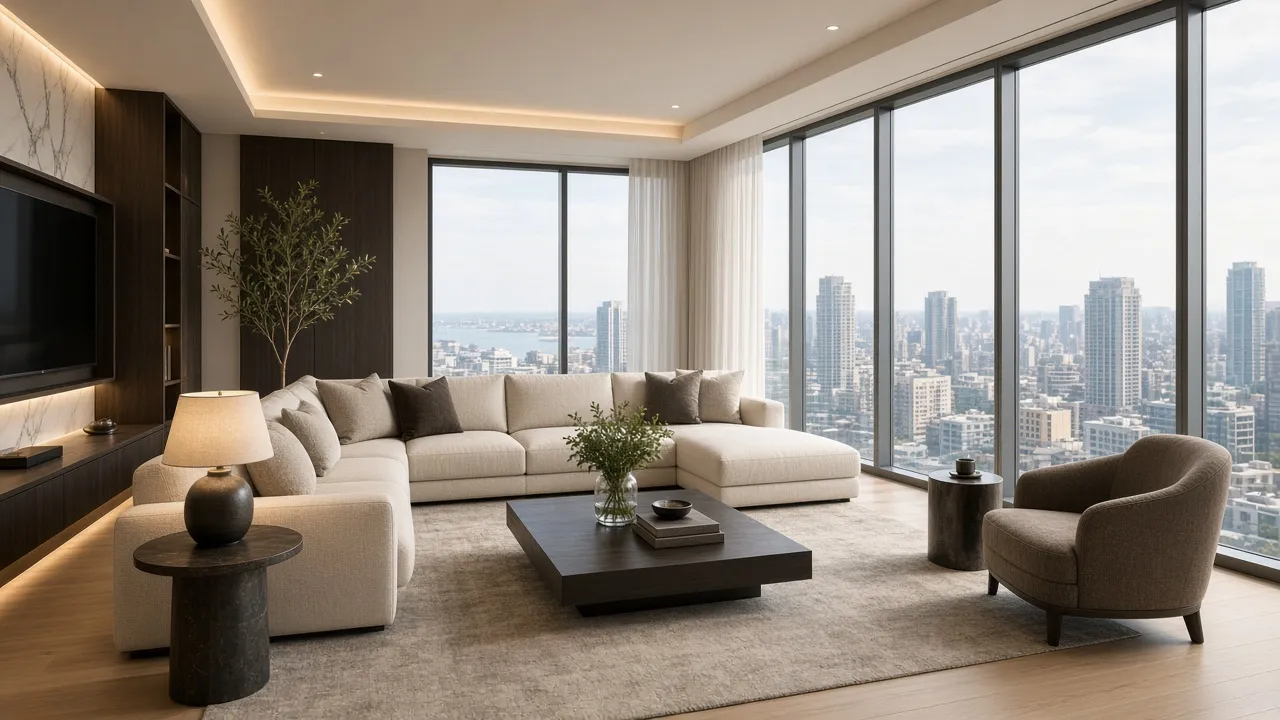
CGI renders should be briefed with accurate architectural drawings, material and finish specifications, landscape plans, realistic lighting conditions and agreed camera angles. The brief should also define the mood and the target buyer so styling feels right.
Accuracy is essential. Renders should reflect the approved design, real views and realistic proportions. Over-idealised renders can create disappointment at possession and damage trust.
- Approved architectural and landscape drawings
- Material, finish and fixture specifications
- Real site orientation, views and surroundings
- Agreed camera angles and times of day
- Styling direction matched to the target buyer
- Approval process with design and legal teams
What makes a good walkthrough film?
A good walkthrough film moves at a natural pace, follows a logical route through the home and amenities, shows realistic light and materials, and tells a story about living there. Music, pacing and transitions should match the project’s positioning.
Create a full-length version for the website and sales gallery, plus short cut-downs for Reels, ads and WhatsApp sharing. Instagram supports Reels up to three minutes, but shorter edits usually travel further.
Why does sample flat photography matter?
Sample flat photography matters because it shows real materials, real proportions and real craftsmanship, which renders cannot fully prove. It is often the most trusted visual asset a project has before completion.
Hire an experienced architectural photographer, style the space thoughtfully and shoot in good natural light. ONEDIGITAL’s photography and videography team shoots sample flats for developers alongside interior and furniture brands.
Shoot both styled wide views and detail images of materials, fittings and joinery, because buyers often zoom in on these details to judge quality, and they make excellent social content.
How should the sample flat be designed for content?
The sample flat should be designed for content as well as for visitors, with thoughtful furniture, lighting, art and styling that photographs well. Collaborating with interior designers and premium furniture and lighting brands can elevate the result.
Ensure the sample flat accurately represents the specifications buyers will receive, or clearly indicate which items are display only. Transparency avoids disputes later. ONEDIGITAL’s work with architecture and interior brands often connects developers with design partners.
How should drone footage be used?
Drone footage should be used to show the site in context: connectivity, surroundings, views, landscape and construction progress. It helps buyers understand location in ways maps cannot.
Follow applicable drone regulations and permissions. ONEDIGITAL’s article on mastering the drone shot covers techniques for residential and facade photography.
How should renders be labelled?
Renders should be clearly labelled as artist impressions or computer-generated visualisations, so buyers understand they are not photographs of completed buildings. This is good practice for transparency and protects the developer’s reputation.
Advertisements also need to comply with RERA, including the registration number and regulator website required by Section 11(2), and state rules such as MahaRERA’s QR code requirements.
How should content be adapted for different channels?
Content should be adapted with different crops, lengths and formats for each channel: wide stills for websites and hoardings, vertical video for Reels and Stories, square and portrait images for feeds, and short clips for WhatsApp. Plan these formats during production to avoid awkward crops later.
Create a content library organised by format and theme so marketing teams and channel partners can find approved assets quickly.
When should content be refreshed?
Content should be refreshed as construction progresses, when the sample flat opens, when amenities are completed and at handover. Real photography gradually replaces renders, strengthening credibility.
Plan a content roadmap aligned to construction milestones, with shoots scheduled in advance.
How should developers choose a visualisation and photography partner?
Developers should choose a visualisation and photography partner by reviewing real estate portfolios for realism, accuracy and consistency, checking how they handle lighting, materials and scale, and speaking to previous developer clients about timelines and revisions. Beautiful but inaccurate work creates problems later, so accuracy should weigh as heavily as aesthetics.
Ask how the partner manages approvals, version control and changes in design, and how quickly they can turn around revisions when plans evolve. For photography and film, check experience with interiors, facades, drone operations and the specific lighting challenges of sample flats and towers.
A partner who understands marketing as well as visual craft will think ahead about formats for websites, Reels, ads and hoardings, saving time and money. ONEDIGITAL brings visual production and marketing under one roof, so content is planned around how it will actually be used across every channel.
How do you measure the impact of visual content?
You measure the impact of visual content through engagement with galleries and films on the website, video completion rates, ad performance by creative, and feedback from site visits. Creative testing in ads reveals which visuals resonate most.
Sales teams are a valuable source of insight: ask which visuals buyers mention or request most often. ONEDIGITAL’s real estate clients use these insights to plan future shoots.
Key takeaways
- Visual content sells homes buyers cannot yet see.
- Brief CGI accurately and avoid over-idealised renders.
- Sample flat photography is the most trusted pre-completion asset.
- Label renders as artist impressions and follow RERA rules.
- Plan formats for every channel during production.
Frequently asked questions
Should real estate renders be labelled?
Yes. Labelling renders as artist impressions is good practice for transparency.
How long should a real estate walkthrough film be?
Create a full version for the website and short cut-downs for social media and ads.
Is drone footage useful for real estate?
Yes, for showing location, surroundings, views and construction progress, following applicable regulations.
Who should photograph a sample flat?
An experienced architectural or interior photographer, ideally with styling support.
Does ONEDIGITAL produce real estate visual content?
Yes. ONEDIGITAL produces photography, films and drone content for developers.
Sources
- The Verge: Instagram Reels can be 3 minutes long now (Jan 2025)
- MahaRERA Order No. 46C/2025 on QR codes and registration numbers in advertisements
Want help applying this to your brand? Talk to the ONEDIGITAL team in Mumbai, Delhi, Gurugram, Bangalore or Dubai.