

Quick answer: A strong jewellery brand identity starts with clear positioning, then expresses it through a memorable name, refined logo and typography, a restrained colour palette, a consistent photography style, premium packaging and a store environment that feels like the brand. Every element should signal the brand’s promise, whether heritage craft, modern design or bridal expertise.
Why does branding matter so much for jewellery?
Branding matters because jewellery buyers are paying for meaning, trust and design as much as for metal and stones. A strong brand helps buyers understand why one piece is worth more than a similar-looking alternative and why they should trust the jeweller with an important purchase.
In a market with many family jewellers and growing numbers of designer labels and online brands, a clear identity is often what makes a jeweller memorable and recommendable.
How should a jewellery brand choose its positioning?
A jewellery brand should choose its positioning by combining its strengths, its target buyer and an unmet need in the market. Positioning might centre on a heritage craft such as kundan or polki, contemporary minimal fine jewellery, bridal customisation, lab-grown diamonds or high jewellery for collectors.
Write a clear positioning statement and test it with existing customers. It should guide collection design, pricing, store experience and communication.
Positioning should also clarify price architecture, for example whether the brand offers entry pieces for gifting alongside high-value bridal sets, so that identity, store design and communication can support the full range without confusing buyers.
What makes a strong jewellery brand name?
A strong jewellery brand name is distinctive, easy to pronounce, evocative of the brand’s character and available for domains, social handles and trademarks. Family names convey heritage and trust, while invented or evocative names can suggest modernity and design focus.
Check for conflicts with existing jewellers and test the name with target buyers. ONEDIGITAL’s branding team develops names alongside identity systems.
How should logo and typography be designed?
Logo and typography should be refined, legible at very small sizes and suitable for engraving, embossing and foiling on packaging. Jewellery logos often appear on tiny tags, ring boxes and certificates, so simplicity matters.
Many jewellery brands use elegant serif typefaces or custom wordmarks, sometimes with a monogram. Avoid overly ornate designs that become illegible when reduced.
What colour palettes work for jewellery brands?
Colour palettes for jewellery brands usually work best when restrained, letting the jewellery provide the colour and sparkle. Deep greens, navy, burgundy, ivory, black and soft neutrals are common because they complement gold, diamonds and gemstones.
Choose colours that reflect positioning: rich, deep tones for heritage and bridal, soft neutrals for contemporary everyday jewellery. Document exact values for print, packaging and digital use.
How do identity elements compare for jewellery brands?
Identity elements differ in where buyers encounter them and how much they influence perception. The table below summarises priorities.
| Element | Where buyers see it | Impact | Priority |
|---|---|---|---|
| Positioning and name | Everywhere | Very high | First |
| Logo and typography | Tags, boxes, store, digital | High | First |
| Photography style | Website, Instagram, ads | Very high | First |
| Packaging | Purchase and gifting | High | Second |
| Store design | In-person visits | Very high for conversion | Second |
| Brand story | Website, PR, store | High | Ongoing |
Why is packaging part of the brand identity?
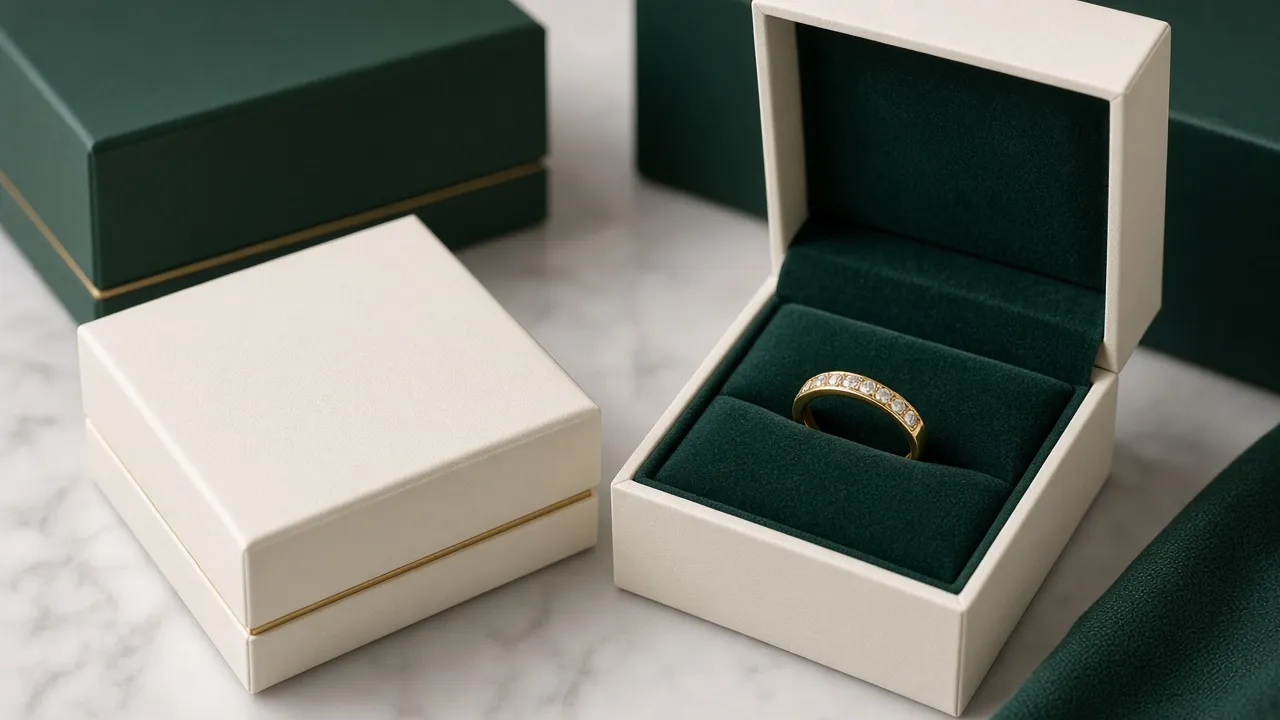
Packaging is part of the brand identity because the unboxing moment is when the buyer, or the recipient of a gift, physically experiences the brand. Premium materials, careful construction and thoughtful details make the purchase feel special and are often shared on social media.
Consider box materials, lining, closures, outer bags, certificates, care cards and personalised notes. Packaging should protect the piece, reflect the brand and feel worthy of the occasion.
- Ring, earring, necklace and bangle boxes in a consistent system
- Outer bags and gift wrapping
- Certificates and authenticity cards
- Care and cleaning instructions
- Personalised notes for gifts and bridal orders
How should photography reflect the identity?
Photography should reflect the identity through consistent lighting, backgrounds, styling, models and editing. A heritage bridal brand might favour rich, warm settings, while a contemporary label might use clean, minimal compositions and natural skin tones.
Write a photography style guide and brief every shoot against it. ONEDIGITAL’s photography team builds jewellery shoots around a defined visual language.
How should the store design express the brand?
The store design should express the brand through materials, lighting, layout, display design and service spaces. Lighting is especially important, because it affects how gold and stones appear.
Private viewing areas, comfortable seating for families and thoughtful details make buyers feel welcome. ONEDIGITAL’s experience with luxury interiors through its lifestyle and luxury industry work helps align store design with brand identity.
How should a jewellery brand write its brand story?
A jewellery brand should write its brand story around genuine origins, craftsmanship, design inspiration and values. Buyers connect with real people and real techniques, not generic claims of luxury.
Share the founder’s journey, the artisans and techniques involved, and what makes each collection meaningful. Keep the story consistent across website, store, packaging and PR.
How should collections be named and organised?
Collections should be named and organised so buyers can navigate the range easily and remember what they love. Each collection benefits from a clear theme, such as a design motif, technique, inspiration or occasion, and a name that fits the brand’s voice.
Avoid naming every piece individually with unrelated words that buyers cannot recall. Instead, use collection names combined with simple descriptors, for example “[Collection] diamond drop earrings”, which also helps search engines and AI tools understand products. Consistent naming across website, store tags, catalogues and invoices reduces confusion for staff and customers.
Organise the website by both collection and category, such as rings, earrings and necklaces, and by occasion, such as bridal, everyday or gifting. This mirrors the different ways buyers shop, whether they are inspired by a story or searching for a specific item.
When should a jewellery brand rebrand?
A jewellery brand should consider rebranding when it wants to reach a new generation, enter new cities or markets, launch a premium line or correct an outdated image. Heritage jewellers can modernise presentation while keeping the trust built over decades.
Plan the transition carefully, involve loyal customers and communicate the reasons behind the change. ONEDIGITAL’s article on luxury branding agencies in India offers guidance on choosing a partner.
Key takeaways
- Jewellery branding conveys meaning, trust and design.
- Positioning should guide collections, pricing and experience.
- Logos must work at tiny sizes and on engraved surfaces.
- Packaging creates a memorable, shareable brand moment.
- Photography and store lighting must reflect the identity.
Frequently asked questions
What makes a good jewellery logo?
A refined, simple design that remains legible at very small sizes and works on engraving, embossing and foil.
Should a jewellery brand use a family name?
Family names convey heritage and trust, while invented names can suggest modern design. Choose based on positioning.
How important is jewellery packaging?
Very important. It shapes the unboxing experience and is often shared on social media.
What colours suit jewellery brands?
Restrained palettes such as deep greens, navy, ivory and neutrals that complement gold and gemstones.
Can ONEDIGITAL brand a jewellery business?
Yes. ONEDIGITAL develops positioning, identity, packaging and photography direction for luxury brands, including jewellers.
Sources
Want help applying this to your brand? Talk to the ONEDIGITAL team in Mumbai, Delhi, Gurugram, Bangalore or Dubai.