

Quick answer: A jewellery website must earn trust quickly and make buying or booking easy. Essentials include outstanding imagery and video, complete product details, clear hallmarking and certification information, size guides, transparent pricing or price-on-request flows, secure checkout, visible policies, appointment and WhatsApp options, fast mobile performance and strong SEO foundations.
Why is the website so important for jewellery brands?
The website is important because it is where buyers verify a brand’s credibility, explore collections in detail and decide whether to buy online, book an appointment or visit a store. Even buyers who discover a brand on Instagram usually check the website before spending significant amounts.
For jewellery, trust is everything. A polished, informative website signals professionalism, while missing information, poor images or confusing navigation raise doubts that can end the journey immediately.
What should every jewellery product page include?
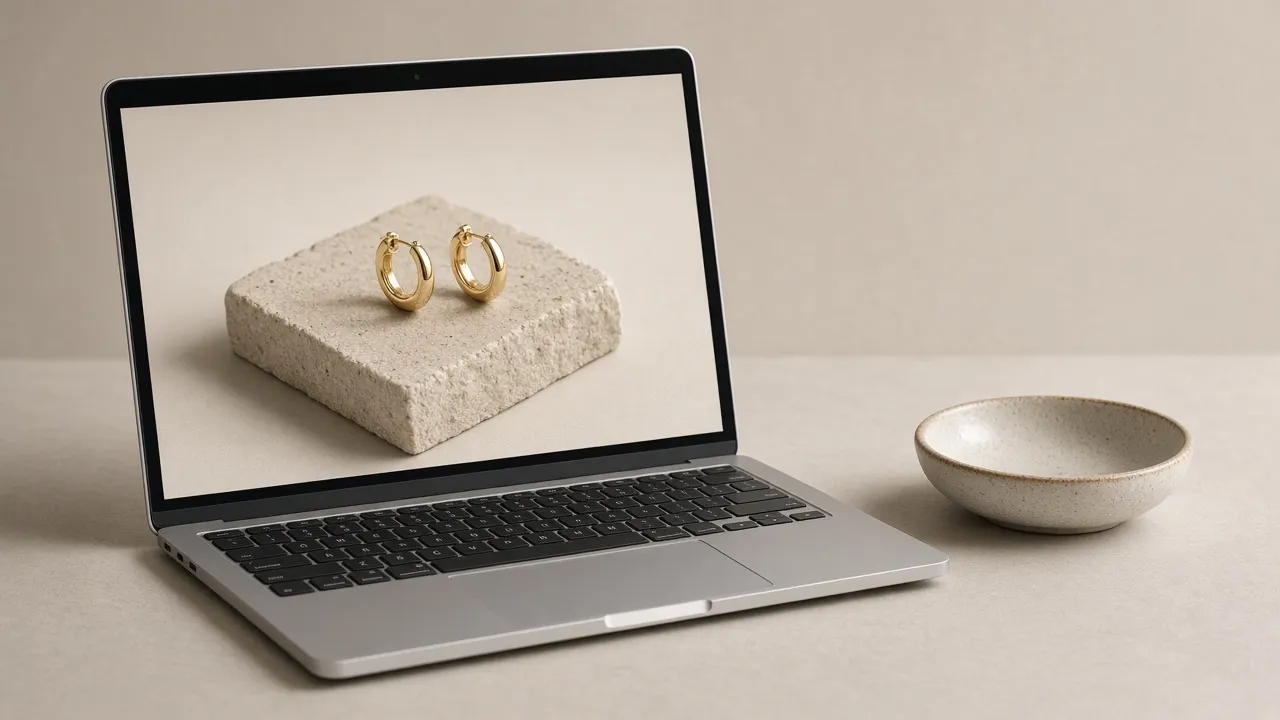
Every jewellery product page should include multiple high-resolution images, video where possible, metal type and purity, weight details where relevant, stone details and certification, dimensions, size options, price or a clear price-on-request route, delivery timelines and links to policies.
Write unique descriptions for every piece rather than repeating supplier text.
- Zoomable images from several angles, plus on-model shots
- Short video showing sparkle and movement
- Metal, purity and hallmarking details
- Stone type, quality and certification where applicable
- Dimensions and size guide
- Price, or a clear price-on-request or appointment option
- Delivery, returns, exchange and buyback information
How should hallmarking and certification be presented?
Hallmarking and certification should be presented clearly on product pages and on a dedicated trust page. Explain what the BIS hallmark and HUID mean and how buyers can verify them.
According to the Government of India, from 1 April 2023 BIS-registered jewellers may sell only gold jewellery with a six-digit HUID, verifiable through the BIS Care app. For diamonds and gemstones, explain the certification provided and how to read it.
Should jewellery websites show prices?
Whether to show prices depends on positioning and product type. Many everyday fine jewellery brands show prices to support online sales, while high jewellery and bespoke bridal brands often use price on request with consultations.
If prices vary with gold rates, explain how pricing is calculated and when it is updated. Transparency about making charges and taxes builds trust either way. The table below compares approaches.
| Approach | Best for | Advantage | Consideration |
|---|---|---|---|
| Show full prices | Everyday fine jewellery, online sales | Transparency, easier buying | Must update with gold rates |
| Price on request | High jewellery, bespoke bridal | Personal consultation | May deter some buyers |
| Starting from prices | Customisable pieces | Sets expectations | Explain what affects final price |
| Price breakdown | All, as supporting detail | Builds trust | Requires accurate data |
How should size guides and customisation be handled?
Size guides should be clear and practical, with instructions for measuring ring and bangle sizes at home and an option to request a sizer or get help on WhatsApp. Sizing uncertainty is a common reason buyers hesitate online.
For customisation, explain the process, options and timelines, and offer consultations in store or by video call.
Showing on-model images that include hand or wrist measurements, or offering a printable ring sizer, further reduces uncertainty for buyers who cannot visit a store.
What policies should be visible?
Policies on returns, exchanges, buyback, repairs, resizing, shipping, insurance and payment security should be easy to find from every product page and the footer. Clear policies reduce anxiety and support conversions.
Write policies in plain language and keep them consistent with what staff tell customers in store.
How should appointments and WhatsApp be integrated?
Appointments and WhatsApp should be integrated prominently, because many jewellery buyers prefer personal guidance before purchasing. Offer in-store and video consultation booking, and a WhatsApp button on product pages that pre-fills the product name.
Ensure trained staff respond quickly with helpful information, photos and videos.
Show consultant availability and expected response times clearly.
How fast should a jewellery website be?
A jewellery website should load quickly on mobile despite heavy imagery. Use modern image formats, compression, responsive sizing and lazy loading, and avoid oversized autoplay videos.
ONEDIGITAL’s web design team optimises jewellery and luxury sites for speed without compromising visual quality.
What SEO foundations should a jewellery website have?
A jewellery website should have well-structured category pages, unique product descriptions, descriptive titles and meta descriptions, image alt text, store pages with accurate details, buying guides and structured data that matches visible content. Google states that its AI features rely on the same SEO fundamentals.
ONEDIGITAL’s digital marketing team builds these foundations for luxury brands.
How should the website reflect the brand identity?
The website should reflect the brand identity through typography, colour, photography style, tone of voice and overall layout. A heritage bridal jeweller and a minimal contemporary label should feel very different online.
Consistency between website, store, packaging and social media reinforces trust and recognition.
How should collections and navigation be organised?
Collections and navigation should be organised around the ways buyers actually shop: by category such as rings, earrings, necklaces and bangles; by occasion such as bridal, festive, everyday and gifting; by metal and stone; and by collection story. Offering several routes into the same products helps different buyers find what they want quickly.
Filters for metal, purity, stone, price band and size are essential on category pages, and they should work smoothly on mobile. Search should handle common spellings and regional terms, such as mangalsutra, jhumka or kada, so buyers are not left with empty results.
Feature curated edits, such as gifts for anniversaries or lightweight office wear, to inspire browsing. Each edit can also become a landing page for campaigns and seasonal search demand, linking back into the main categories and supporting both conversions and SEO.
How should security and payments be handled?
Security and payments should be handled with trusted payment gateways, secure checkout, clear order confirmation and insured, trackable shipping for high-value items. Display security information clearly to reassure buyers.
Offer multiple payment options suitable for high-value purchases, and explain delivery protection.
How should website performance be measured?
Website performance should be measured by conversion rate, appointment bookings, WhatsApp enquiries, average order value, product page engagement, speed and organic traffic. Connect analytics to sales and CRM data.
Review regularly and test improvements. ONEDIGITAL supports lifestyle and luxury brands with website design, SEO and optimisation.
Key takeaways
- The website is where buyers verify a jeweller’s credibility.
- Product pages need complete details and outstanding imagery.
- Explain hallmarking, HUID and certification clearly.
- Make policies, sizing help and appointments easy to find.
- Balance visual richness with fast mobile performance.
Frequently asked questions
What should a jewellery product page include?
Images, video, metal and purity, stone details, dimensions, size guide, price or price-on-request and policies.
Should jewellery websites show prices?
It depends on positioning. Everyday fine jewellery often shows prices; high jewellery often uses price on request.
How can jewellery websites build trust?
Clear hallmarking, certification and policy information, quality imagery and responsive support.
Do jewellery websites need WhatsApp integration?
It is highly useful, as many buyers prefer personal guidance before purchasing.
Can ONEDIGITAL build a jewellery website?
Yes. ONEDIGITAL designs and builds websites for luxury and lifestyle brands, including jewellers.
Sources
- PIB: Mandatory HUID-based hallmarking from 1 April 2023
- Google Search Central: AI features and your website
Want help applying this to your brand? Talk to the ONEDIGITAL team in Mumbai, Delhi, Gurugram, Bangalore or Dubai.