

Quick answer: Marble, tile and building material brands grow by turning commodity-looking products into material stories. The best marketing combines striking slab and texture photography, honest technical information, generous sample programmes, experience galleries, strong architect relationships and helpful content that answers selection and care questions in search and AI answers.
Why do material brands struggle to differentiate?
Material brands struggle to differentiate because, to many buyers, one white marble or grey tile looks much like another. When products appear interchangeable, the conversation shifts to price per square foot, and margins shrink.
Differentiation comes from origin, selection, processing, consistency, service and storytelling. Where a stone is quarried, how slabs are selected and book-matched, how tiles are pressed and finished, and how reliably a brand delivers on large projects are all reasons to choose one supplier over another.
Brands that invest in a recognisable identity, from gallery design to packaging and sample boxes, are remembered by architects long after a single visit. Consistent naming of collections and finishes also makes specification easier and reduces costly errors on site.
Who buys and specifies building materials?
Building materials are specified mainly by architects and interior designers, bought or approved by homeowners and developers, and installed by contractors. Each plays a different role, and marketing has to reach all three.
For premium stone and surfaces, architects and designers often choose the material and bring the client to the gallery. For tiles and plywood, contractors and dealers can have strong influence. Understanding who really decides in your category shapes where marketing effort goes.
How should material brands photograph their products?
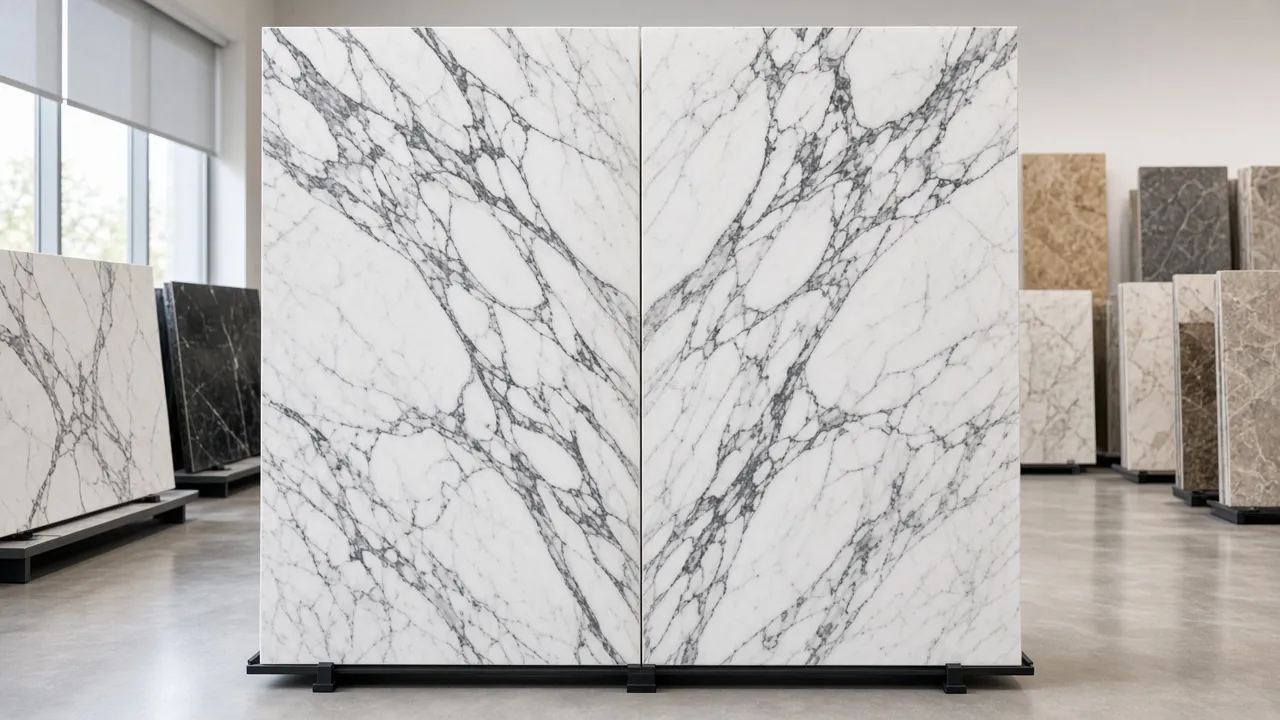
Material brands should photograph products at three scales: full slab or panel, close-up texture and installed application. Full-slab shots show pattern and veining, close-ups show finish and depth, and installed shots show how the material transforms a space.
Lighting is critical because stone and glazed surfaces reflect strongly. Professional architectural and product photography avoids glare and colour shifts that misrepresent the material. Video that moves slowly across a slab is especially effective on Instagram.
Why are sample programmes so effective?
Sample programmes are effective because architects and designers rarely specify a material they have not touched. A well-designed sample box or swatch kit keeps your brand on the studio’s material shelf, where it is seen during every project discussion.
Make sampling easy with an online request form, quick dispatch and clear labelling that includes product name, finish and a link to the product page. Follow up a few weeks later to ask about upcoming projects.
Track sample requests by studio and project so your sales team knows which architects are actively considering your materials. A short note asking how the project is progressing, sent at the right moment, is often the most effective follow-up a material brand can make, and it builds a relationship that lasts beyond one specification.
What content should material brands publish?
Material brands should publish selection guides, comparison content, care and maintenance advice, and project stories. These answer the questions buyers and specifiers ask before choosing.
- Marble vs granite vs quartz for kitchens and bathrooms
- Choosing tiles for wet areas, outdoors and high-traffic spaces
- How book-matching and slab selection work
- Sealing, cleaning and caring for natural stone
- Plywood and board grades explained for interiors
- Project stories with architect credits
How do material brands compare across channels?
Material brands typically rely on experience galleries and specifier relationships most, supported by search, Instagram and PR. The table below compares channel roles.
| Channel | Primary audience | Role | Strength |
|---|---|---|---|
| Experience gallery | Architects, clients | Final selection | Touch and scale |
| Sample programme | Architects, designers | Stay on the material shelf | Ongoing visibility |
| SEO and content | Homeowners, designers | Research and comparison | Compounding reach |
| Designers, homeowners | Visual inspiration | Texture and transformation | |
| LinkedIn and PR | Architects, developers | Professional credibility | Project credits and trust |
How should material brands approach SEO and AI search?
Material brands should approach SEO and AI search by publishing clear, specific pages for each material type, finish and application, and by answering selection and care questions in depth. A search such as “best marble for kitchen countertop India” is a perfect opportunity for a helpful guide.
Google says the same SEO fundamentals apply to AI Overviews, so clean structure, readable text and accurate information matter. Being credited in architects’ project write-ups and design publications also helps AI tools associate your brand with quality projects. ONEDIGITAL’s digital marketing team builds these content clusters for material brands.
What role do galleries and events play?
Galleries and events let architects and clients experience materials at full scale under good lighting, which is where premium decisions are made. A slab gallery or tile experience centre should feel curated, not like a warehouse.
Host architect evenings, new collection launches and material talks. Portfolio work for brands such as Mirage Marble and Marble City shows how galleries, events and digital content can reinforce a premium position.
How can material brands win large projects?
Material brands win large projects by proving consistency, capacity and service as clearly as they prove beauty. Developers, hospitality groups and contractors need confidence that the hundredth slab will match the first, that quantities will arrive on schedule and that someone will solve problems on site.
Create project-focused materials that explain stock depth, block or batch selection processes, quality checks, logistics and technical support. Case studies of completed large projects, with architect and developer credits where permitted, are especially persuasive. Use LinkedIn and direct relationships to reach procurement teams, PMC firms and contractors, and invite them to see block or batch selection in person.
Respond quickly to tender enquiries with complete, well-presented documentation. Professional presentation of samples, technical data and references often distinguishes a premium supplier from a commodity one in the eyes of project teams. ONEDIGITAL’s work in real estate and hospitality shows how much project buyers value this clarity.
How should material brands use Instagram and LinkedIn?
Material brands should use Instagram to show texture, scale and transformation, and LinkedIn to build relationships with architects, developers and contractors. Slow pans across slabs, installation time-lapses and finished projects suit Instagram well.
On LinkedIn, share project completions with architect credits, quality and sourcing stories, factory or quarry insights and sustainability efforts. Tagging collaborators with permission extends reach into exactly the right professional circles.
Key takeaways
- Differentiate through origin, selection, processing and service.
- Photograph materials at slab, texture and installed scale.
- Sample programmes keep your brand on studio shelves.
- Selection and care guides support search and AI visibility.
- Galleries and events close premium decisions.
Frequently asked questions
How can a marble brand attract more architects?
Offer easy sampling, curated gallery visits, technical support and architect events, and credit architects in project content.
What content should a tile brand publish?
Selection guides for different spaces, finish and slip-resistance explanations, care advice and installed-project stories.
Is Instagram useful for building material brands?
Yes. Texture close-ups, slab pans and installed projects perform well and help designers discover materials.
How do material brands appear in AI answers?
By publishing clear guides, keeping product information accurate and earning credits in architect projects and design media.
Has ONEDIGITAL worked with material brands?
Yes. ONEDIGITAL’s portfolio includes stone and surface brands such as RSM Marble, Mirage Marble and Marble City.
Sources
Want help applying this to your brand? Talk to the ONEDIGITAL team in Mumbai, Delhi, Gurugram, Bangalore or Dubai.