

Quick answer: Website costs for architects and interior designers depend on whether the site is template-based or custom-designed, how many project pages it has, who writes and photographs the content, how much SEO and AI-search readiness is included, and ongoing hosting and maintenance. Compare quotes on scope, performance and ownership rather than price alone.
Why do website quotes vary so much for design practices?
Website quotes vary so much because a design practice website can be anything from a pre-built template with a gallery to a fully custom, performance-optimised portfolio with detailed case studies, structured data and integrated content management. The work behind each is very different.
Architects and interior designers also have higher visual standards than many businesses. Typography, image presentation, layout rhythm and loading speed all reflect directly on the practice. Achieving that level of craft takes more design and development time than a generic business site.
We have deliberately not listed price figures, because rates vary between agencies, freelancers and cities, and a number without scope can mislead. Use the factors below to understand and compare quotes.
What does a good architecture or interior design website include?
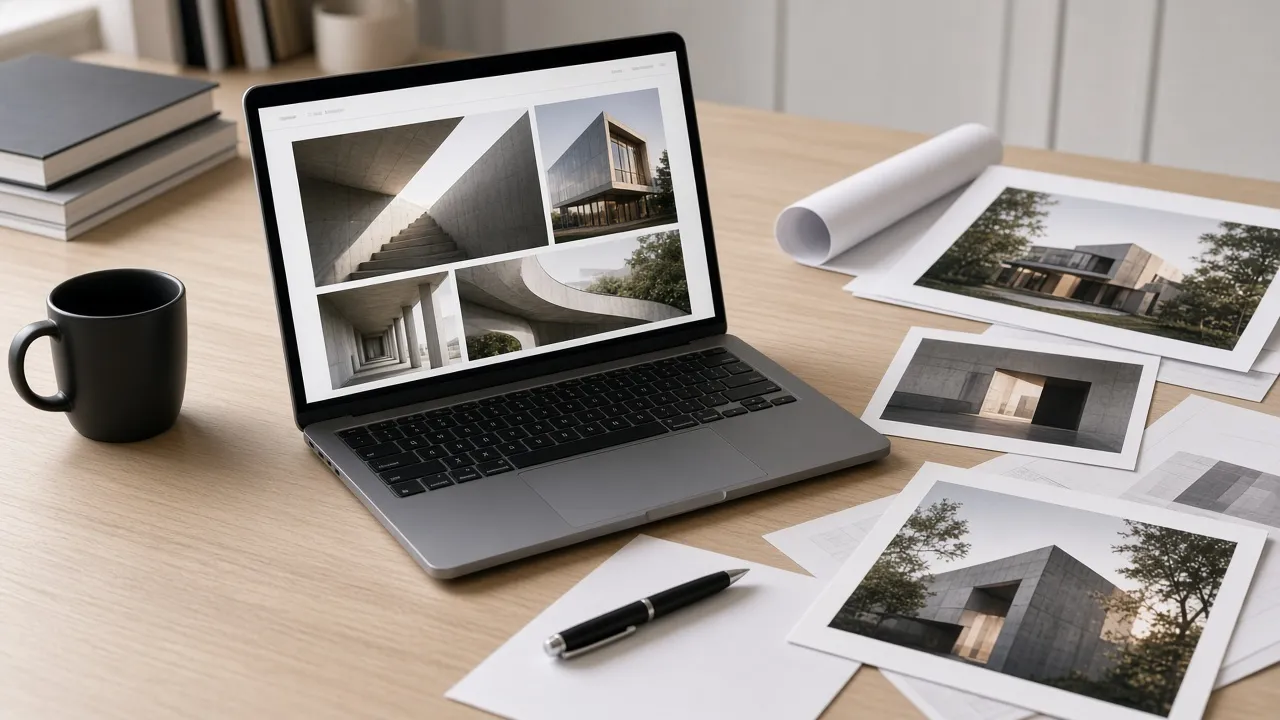
A good architecture or interior design website includes detailed project pages, a clear services and process section, an about page with the principal’s background, contact and location information, and a fast, mobile-friendly design. Each project page should combine excellent photography with written context.
- Homepage with clear positioning and featured projects
- Project pages with brief, approach, materials, credits and outcome
- Services and process explanation
- About and team pages
- Insights or journal for articles
- Contact page with addresses, map and enquiry form
- Structured data, metadata and analytics
Template or custom: which is right for a practice?
A template is right for a practice that needs a clean, quick, affordable presence, while a custom site suits practices that want a distinctive experience and plan to invest in content and search visibility. The table below compares the two.
| Aspect | Template site | Custom site |
|---|---|---|
| Design distinctiveness | Limited | High |
| Speed to launch | Fast | Slower |
| Performance control | Depends on template | Can be optimised fully |
| SEO and structured data | Basic unless added | Built in from the start |
| Relative investment | Lower | Higher |
What factors affect website cost?
The main factors affecting website cost are design approach, number of page templates, number of projects to load, content creation, integrations, SEO setup, multilingual needs and timelines. Each adds design, development or content time.
Content is often underestimated. Writing project descriptions, editing photographs and preparing alt text for dozens of projects takes real effort. Decide early whether the agency or your team will handle it.
How important is photography for an architect’s website?
Photography is critical for an architect’s website because the work is judged visually first. Even the best-designed site cannot compensate for poor, inconsistent images.
Budget for professional architectural photography of your best projects. Consistent lighting, angles and editing make a portfolio feel coherent and premium.
Should a design practice website include SEO and AI readiness?
A design practice website should include SEO and AI readiness from the start, because retrofitting it later is harder. This means clean page structure, descriptive titles and meta descriptions, image alt text, fast loading, structured data and written content that answers client questions.
Google says its AI features rely on the same SEO fundamentals as regular search, so a well-built site supports both. ONEDIGITAL’s web design projects include this foundation, and its article on why interior designer websites fail at SEO and GEO explains common pitfalls.
What ongoing costs should practices plan for?
Practices should plan for domain renewal, hosting, security updates, plugin or platform licences, backups and periodic content updates. Neglected websites slow down, break or become vulnerable over time.
Some agencies offer maintenance plans that cover updates, monitoring and small changes. Ask what is included and how quickly issues are resolved.
Set a recurring reminder to review plugins, backups and security every quarter, and keep a record of who has admin access so nothing is lost when staff change.
How should you compare website proposals?
You should compare website proposals by checking the number of templates and pages, who provides content, SEO and structured data scope, performance targets, CMS training, ownership of design files and code, and post-launch support.
Ask to see live sites the agency has built, test their speed on mobile and speak to past clients. A slightly higher investment in a site that loads fast and is easy to update often pays for itself.
How long does it take to build a practice website?
Building a practice website typically takes several weeks for a template-based site and a few months for a custom site with many projects. Content readiness is usually the biggest factor in timelines.
Gather project photography, descriptions and team information early. Practices that prepare content in parallel with design launch much faster.
What features matter most for architects versus interior designers?
Architects and interior designers share most website needs, but their emphasis differs. Architecture practices often need to present larger, multi-phase projects with drawings, site context and sustainability information, and may want separate sections for residential, commercial, institutional and hospitality work. Clear project filters and well-written case studies help developers and institutional clients find relevant experience quickly.
Interior designers usually focus on finished spaces, materials and styling, with more emphasis on before-and-after imagery, room-by-room galleries and process explanations for homeowners. Features such as a simple consultation booking form, WhatsApp contact and clear information about how fees and timelines work are often more important for residential interior studios.
Both benefit from an insights section where principals answer common client questions, and from location pages if they serve several cities. Discuss these priorities at the start of the project so the site structure supports how your clients actually choose a practice, rather than forcing your work into a generic template.
How do you know if your website is working?
You know your website is working when it brings qualified enquiries, ranks for relevant searches, loads quickly and helps clients understand your practice before the first meeting. Track enquiries, sources and the pages visitors view before contacting you.
Review analytics quarterly and keep adding new projects and articles. ONEDIGITAL’s website portfolio shows examples of sites built for design and luxury brands.
Key takeaways
- Website cost depends on design approach, content and scope.
- Project pages need photography and written context.
- Build SEO and AI readiness in from the start.
- Plan for hosting, maintenance and updates.
- Compare proposals on scope, performance and ownership.
Frequently asked questions
How much does an architect website cost in India?
It varies widely by scope, design approach and content needs. Ask for itemised proposals to compare fairly.
Is a template website good enough for architects?
It can be for a new practice, but custom sites offer more distinctiveness and control as the practice grows.
Should I write my own project descriptions?
You can, but an experienced writer can help structure them for clients and search engines.
Do architect websites need a blog?
A journal or insights section helps answer client questions and supports search and AI visibility.
Does ONEDIGITAL build websites for architects?
Yes. ONEDIGITAL designs and builds websites for architects, interior designers and design brands.
Sources
Want help applying this to your brand? Talk to the ONEDIGITAL team in Mumbai, Delhi, Gurugram, Bangalore or Dubai.